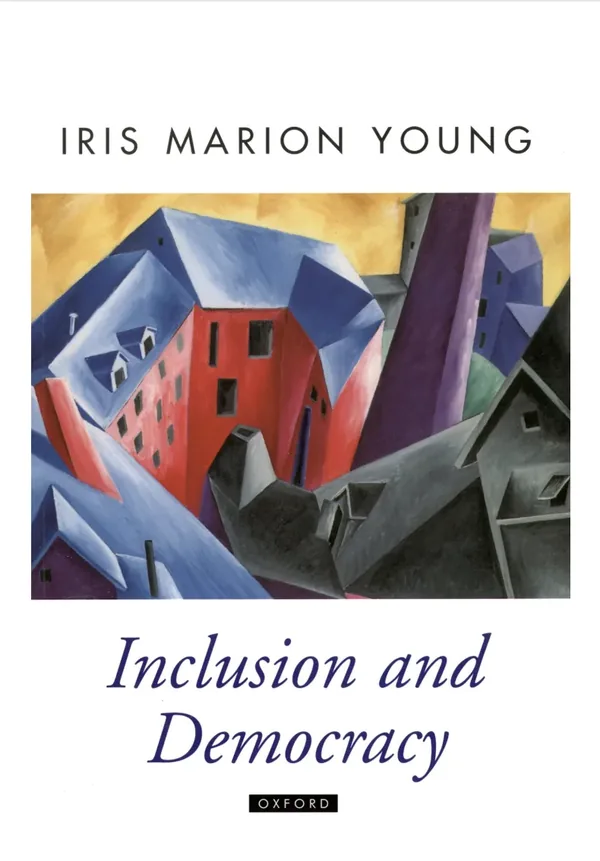
Iris Marion Young, an American political theorist and socialist feminist concerned with justice and social difference, asks what genuine democratic inclusion requires when political institutions are formally open but structural inequality, cultural differences, and unequal political power still persist.
Young argues that formal access is simply not enough for democratic inclusion. People can have equal voting or speaking rights and still remain marginalized because of economic inequality or social status, or because established forms of political discussion make it easier for some groups to speak and be heard than others. Democracy, therefore, must address the conditions under which citizens actually participate in politics, and rethink the narrow model of deliberative democracy that privileges detached, orderly argument as the ideal political language.
From a feminist political theory standpoint, Young’s work links democracy to structural injustice and suggests that its central problem is that seemingly democratic procedures reproduce exclusion.
One of the most important works for identifying the true shortcomings of modern democratic systems.