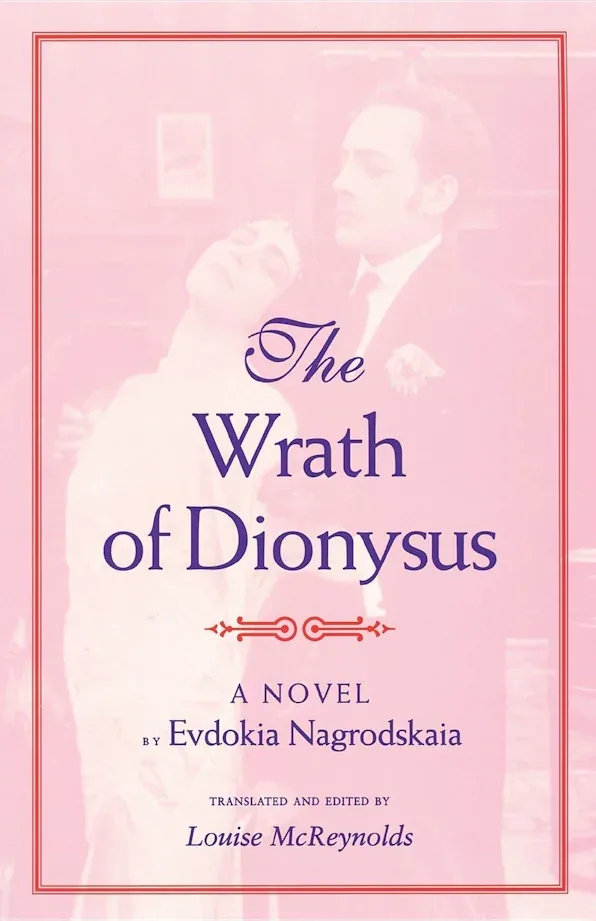
A novel that went through 10 editions in 6 years after its first publication, and aged perfectly well.
The main character is an artist who earns her living through her craft, a completely modern (by today’s standards) woman with original thinking, open and free in her judgment, smart and sarcastic.
On her way to her future husband’s family home, she meets a man on the train and begins a passionate affair. This affair will become a starting point for her to explore her ideas about love and affection, responsibility, and, most importantly, her and her lover’s controversial sexualities. What initially appears to be a classic romance novel instead serves as a creative exploration of social stereotypes that constrain people’s actions and decisions.
Male contemporaries and the general male audience in Russia often dismissed the novel as low-quality; men occasionally referenced it humorously in their literary works. Still, it remains one of the earliest known texts to explore gender as a spectrum and, in fact, is quite interesting in style.
More than forty years before the first push to define gender as a social construct, popular literature depicts protagonists with intricate identities and attempts to discuss this openly, not from a moral standpoint, but from a standpoint of freedom of expression and the expansion of the concept of the norm.
A guest review by Elena Gnedovskaya, a journalist, translator, and writer.