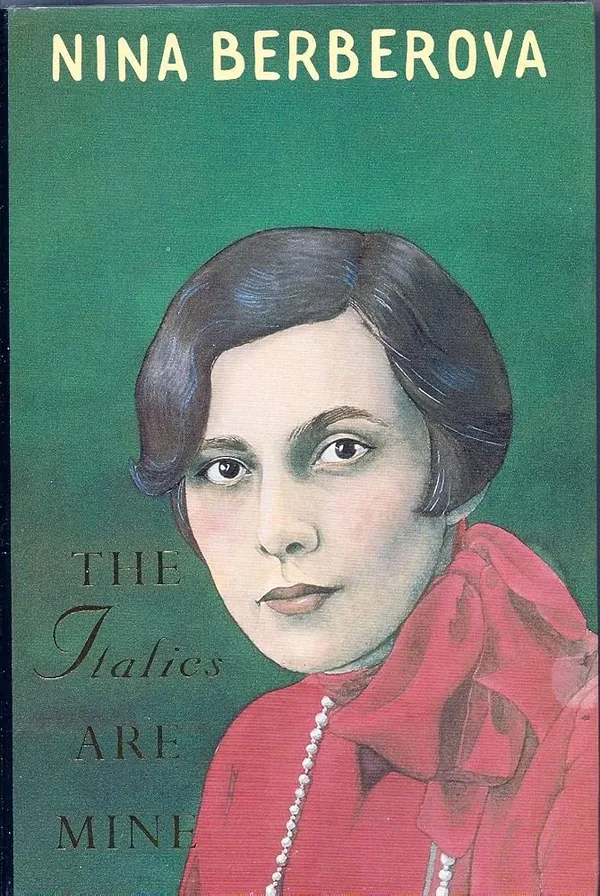
Probably the first autofiction in the history of Russian literature (though more often called an autobiography), written by a Russian writer, poetess, and teacher who, in June 1922, emigrated permanently from Soviet Russia with her husband, poet and literary critic V.F. Khodasevich. Originally written in Russian, it was brilliantly translated by Philippe Radley, whose work was immediately recognized in the United States with a 1970 National Book Award nomination.
A monumental and unique document of the era.
In the West, the Russian diaspora was largely unnoticed until the mid-1950s. Before Berberova began her work on the memoir, only two books on first-wave emigration writers had already been published: Georgy Adamovich’s “Loneliness and Freedom” (1955) and Gleb Struve’s “Russian Literature in Exile” (1956). Neither has been translated into English yet; both are essentially collections of essays and scholarly articles that explore the topic but offer no insight into the real lives of Russian emigrants.
Berberova, in her turn, knew almost the entire Russian émigré community and crafted several lively, original portraits of those she interacted with. Her subjects ranged from the older generation—such as Andrey Bely, Maxim Gorky, Marina Tsvetaeva, Ivan Bunin, Dmitry Merezhkovsky, and Zinaida Gippius—to the younger generation, including Georgy Ivanov and Vladimir Nabokov, many of whom, by the way, were not happy about being included in the book.
In addition to being an excellent writer with a distinctive style and perspective, Berberova’s thorough, critical view of life in exile among 20th-century Russian intellectuals will, surprisingly, offer fresh insight into the roots and evolution of modern Russian literature.
A guest review by Elena Gnedovskaya, a journalist, translator, and writer.