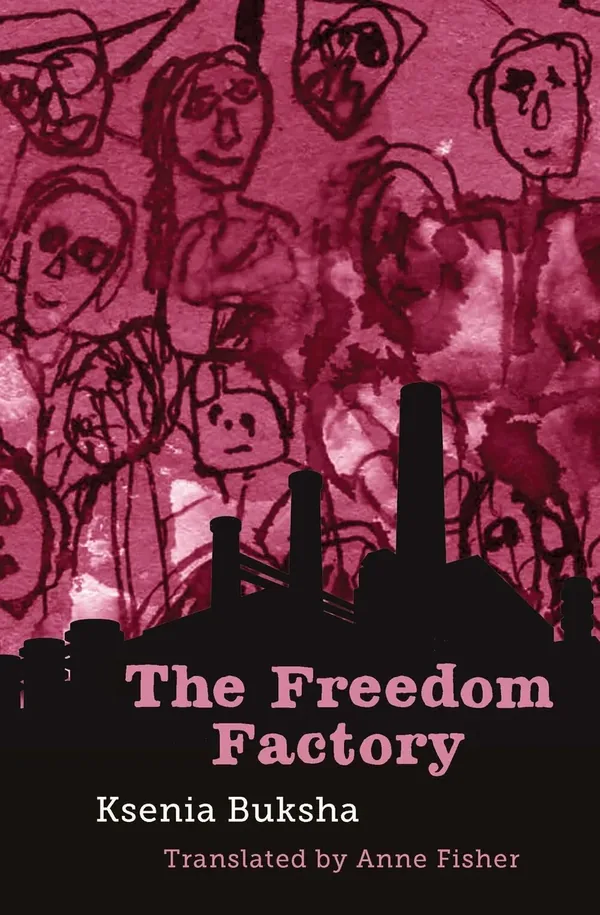
“The Freedom Factory” won Russia’s National Bestseller Prize in 2014 and was also a finalist for the Big Book Award.
It is a novel about a semi-invented Soviet military factory, based on interviews with workers in a real-life factory of former Leningrad, and consisting of separate, motley chapters connected by factory themes. The approximate time period is from the mid-20th century to the 1990s: from the times when the world is on the brink of the Cuban Missile Crisis, everyone fears the start of a third world war, and the Freedom factory produces secret equipment for submarines, to the period when, to survive in a new country, the plant begins to produce meat grinders.
This text will require effort from the reader: the narrative is told by the workers themselves, who, it seems, talk and talk and talk about their past, present, and future without pause. The workers have no names (only letters), and at first it will be difficult to tell where one ends and the other begins. Still, after a while, the text, from a strange collection of phrases, will unfold into something that best illustrates the everyday life of a post-Soviet person and a Russian person in general—a verbose one, talking a lot about himself, keeping something silent, making up fables, superstitious, insecure, suddenly desperate, often senseless. The best text to get a sense of the post-Soviet mindset.
A guest review by Elena Gnedovskaya, a journalist, translator, and writer.